
Top Digital Marketing Strategies for Law Firms in 2026
TL;DR:
In 2026, law firms need a client-focused, AI-ready digital marketing strategy to stay competitive. Key tactics include a mobile-optimized website, local SEO, content marketing, PPC and social media ads, email campaigns, reputation management, and video marketing. Leveraging analytics and emerging technologies like AI, voice search, VR/AR, blockchain, and marketing automation boosts visibility, engagement, and client conversions.
How Can Law Firms Stay Competitive in 2026?
As 2026 progresses, law firms must go beyond having a website to stay competitive. AI-powered search, advanced SEO, and modern digital marketing are essential for visibility, authority, and client engagement. At DiscoverMyBusiness, we help law firms attract high-quality leads and build strong online reputations through user-focused websites, local SEO, content marketing, PPC, and social media strategies. These proven techniques empower your firm to dominate your local market, engage clients effectively, and stay ahead of emerging digital trends.

Table of Contents
- Building a User-Centric Law Firm Website
- Local SEO: Dominate Your Geographic Market
- Content Marketing: Educate, Engage, and Convert
- Pay-Per-Click (PPC) Advertising
- Social Media Marketing
- Email Marketing and Client Nurturing
- Reputation Management
- Video Marketing
- Analytics and Data-Driven Marketing
- Emerging Technologies for Law Firms in 2026
- Action Plan for Law Firms
Building a User-Centric Law Firm Website
Why It Matters in 2026
A law firm’s website is the foundation of its digital presence and a key element of effective law firm marketing. In 2026, user experience (UX), mobile-first indexing, and AI search visibility are critical for attracting and converting clients. A website that is easy to navigate, fast-loading, and client-focused can significantly enhance engagement, generate leads, and strengthen your overall marketing strategy.
Key Elements of a User-Centric Website:
- Mobile Responsiveness & Speed Optimization: Ensure your site works seamlessly on all devices and loads quickly. Use tools like Google PageSpeed Insights to identify areas for improvement.
- Clear Navigation & Practice Area Pages: Organize your services logically. Include dedicated pages for each practice area and a simple menu structure.
- Accessibility (WCAG 2.1+): Make your website accessible to all users, including those with disabilities, by providing text alternatives for images, keyboard navigation, and sufficient color contrast.
- Client-Focused Content: Include FAQs, case studies, blog posts, and guides that answer common legal questions in plain language.
- Interactive Features: Add chatbots, appointment forms, or calculators to streamline client engagement.
- Analytics Integration: Use heatmaps and user behavior tracking tools to understand visitor interactions and improve website performance.
A well-designed, client-focused website boosts engagement, conversion optimization, and overall online visibility for your law firm.

Local SEO: Dominate Your Geographic Market
Importance of Local Search in 2026
Local SEO ensures that your law firm is visible to potential clients in your geographic area. Most clients search for legal services near them, so ranking highly in local searches can significantly impact lead generation.
Key Local SEO Strategies:
- Google Business Profile Optimization: Keep your profile complete and accurate with business name, address, phone number (NAP), hours, and photos.
- Local Keywords & Geo-Specific Phrases: Use phrases like “personal injury lawyer in Miami” or “estate planning attorney near [city]” naturally in content, titles, and meta descriptions.
- Consistent NAP Citations Across Directories: Ensure your business information matches exactly across all online directories.
- Schema Markup for LocalBusiness: Implement structured data so search engines understand your location, services, and contact info.
- Community Engagement: Partner with local events, sponsor programs, or host seminars to increase visibility in your area.
- Reviews & Reputation Management: Encourage satisfied clients to leave reviews and respond professionally to all feedback.
- Voice Search Optimization: Optimize content for conversational queries like “Who is the best divorce lawyer near me?”
Optimizing your local SEO ensures your firm appears in front of the right clients at the right time, driving more qualified leads.
Content Marketing: Educate, Engage, and Convert
Purpose Of Content marketing
Content marketing positions your law firm as an authority, educates clients, and attracts qualified leads. By providing valuable information, you build trust and credibility.
Types of Content:
- Blog Posts: Answer common legal questions and address trending issues.
- Video Explainers & Short-Form Content: Make complex legal topics easy to understand.
- Ebooks, Guides, and Checklists: Offer downloadable resources in exchange for contact information.
- Infographics & Visual Content: Simplify complex legal concepts visually.
- Webinars & Live Q&A Sessions: Engage with clients directly and demonstrate expertise.
High-quality, informative content builds authority, fosters trust, and turns website visitors into loyal clients.
Best Practices
- Optimize all content for SEO and relevant keywords.
- Repurpose content across multiple channels to maximize reach.
- Include clear calls-to-action (CTAs) to convert readers into clients.

Pay-Per-Click (PPC) Advertising
Why PPC Matters for Law Firms
PPC provides immediate visibility for your law firm in search results and social media platforms. It is especially effective in competitive legal markets where organic reach may take time.
Strategies for 2026:
- Geo-Targeted Search Ads: Focus your ads on specific cities, neighborhoods, or zip codes.
- Compelling Ad Copy & Ad Extensions: Highlight your unique selling points and include features like sitelinks or call buttons.
- Landing Pages Optimized for Conversions: Match your landing pages to the ad intent with strong CTAs.
- Retargeting Campaigns: Re-engage users who visited your website but did not take action.
Well-targeted PPC campaigns drive immediate visibility, attract high-intent clients, and maximize your law firm’s ROI.
Platforms to Leverage:
- Google Ads
- Microsoft Advertising (Bing Ads)
- LinkedIn Ads
- Facebook Ads
Leveraging the right advertising platforms ensures your law firm reaches the right audience where they are searching and engaging online.
AI & Automation in PPC:Use smart bidding and predictive analytics to optimize ad performance and maximize ROI.

Email Marketing and Client Nurturing
Why Email marketing is Important
Email marketing is a powerful tool for law firms to nurture leads, retain clients, and maintain ongoing engagement. Personalized email campaigns keep your firm top-of-mind and can drive repeat business while generating new client inquiries.
Key Components:
- Segmentation and Personalization: Tailor emails to specific audiences based on practice area interest, location, or stage in the client journey.
- Automated Drip Campaigns: Use automated sequences to guide leads through the client funnel, such as follow-ups after downloading a guide.
- Newsletters and Educational Campaigns: Provide valuable legal insights, updates, and tips to establish authority.
- Strong CTAs and Actionable Advice: Include clear instructions like “Schedule a Free Consultation” or “Download Our Legal Checklist.”
Email marketing nurtures leads, strengthens client relationships, and drives measurable growth for your law firm.
Best Practices:
- Optimize emails for mobile devices.
- Conduct A/B testing for subject lines, content, and CTAs.
- Track key metrics like open rates, click-through rates, and conversions to continually improve performance.
Online Reputation Management
Why Online Reputation Matters
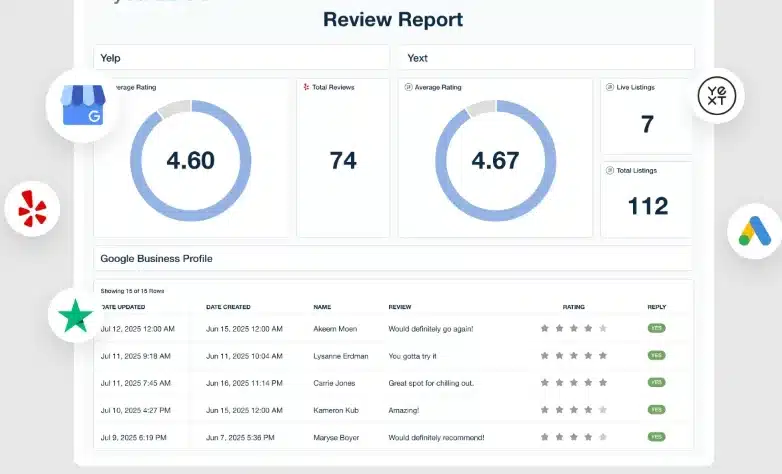
A strong online reputation builds client trust, improves conversions, and supports SEO efforts. Positive reviews and consistent messaging help law firms stand out in competitive markets.
Key Strategies:
- Encourage and Respond to Reviews: Request feedback from satisfied clients and respond professionally to all reviews.
- Showcase Testimonials: Use text and video testimonials to highlight client success stories.
- Monitor Online Mentions: Track mentions of your firm across social media, directories, and review sites.
- Transparency and Ethical Marketing: Clearly communicate services, fees, and processes to maintain credibility.
Proactively managing your online reputation builds trust, strengthens credibility, and attracts more clients to your law firm.
Proactive Reputation Building:
- Participate in community events and sponsorships.
- Apply for awards or certifications to enhance credibility.
- Publish thought leadership content to demonstrate expertise.
Video Marketing
Why Videos Dominate in 2026
Video content engages audiences, builds trust, and improves SEO by increasing time on page and shareability. Videos are also ideal for explaining complex legal topics clearly and concisely.
Types of Videos Production:
- Attorney Introductions: Humanize your team and showcase expertise.
- Explainer Videos for Legal Processes: Simplify complex legal procedures for clients.
- Client Testimonials and Case Studies: Demonstrate results and credibility.
- Educational Content and Behind-the-Scenes: Provide value while showing your firm’s culture.
- Live Streams and Webinars: Engage audiences in real time for Q&A or legal education.
Engaging video content builds trust, showcases expertise, and helps convert viewers into loyal clients.
Best Practices:
- Keep videos concise and high-quality.
- Optimize titles, descriptions, and transcripts for SEO.
- Include clear CTAs, such as scheduling a consultation.
Following best practices ensures your videos attract attention, rank well in search, and drive meaningful client actions.
Distribution Channels:
- Embed videos on your website.
- Share on YouTube, LinkedIn, Instagram, and Facebook.
- Include in email campaigns to increase engagement.
Analytics and Data-Driven Marketing
Purpose Of Data-driven Marketing
Data-driven marketing allows law firms to optimize ROI, improve client acquisition, and make informed strategic decisions. Analytics reveal what works, what doesn’t, and how to allocate resources efficiently.
Key Metrics to Track:
- Website Design: Traffic, bounce rate, session duration.
- Conversions: Contact form submissions, phone calls, case evaluations.
- Email and Social Media: Open rates, engagement, click-through rates.
- PPC Campaigns: Cost-per-click (CPC), return on ad spend (ROAS), conversion rate.
Leveraging analytics empowers law firms to make informed decisions, maximize ROI, and attract more high-quality clients.
Tools and Techniques:Google Analytics and Google Data Studio for dashboards. Predictive analytics to forecast trends and client behavior.
Challenges and Solutions:
- Data Overload: Focus on metrics aligned with your goals.
- Privacy Concerns: Ensure compliance with GDPR and CCPA.
- Integration Issues: Use marketing automation platforms to consolidate data.
Emerging Technologies for Law Firms in 2026
Leveraging emerging technologies in 2026 allows law firms to streamline operations, enhance client experiences, and stay ahead of the competition.
- AI Serices and Automation: Chatbots, automated document review, predictive analytics for case outcomes.
- Voice Search Optimization: Target conversational, long-tail queries for AI-powered assistants.
- Virtual and Augmented Reality: Virtual consultations and courtroom simulations.
- Blockchain: Smart contracts and secure client data storage.
- Marketing Automation Platforms: HubSpot, ActiveCampaign, Marketo for consistent communication.
- 5G and Mobile-First Technologies: Faster video, mobile experiences, and real-time collaboration.
Adopting these technologies positions law firms as innovative, efficient, and client-focused in 2026.

Action Plan for Law Firms
The Digital Marketing landscape for law firms in 2026 is competitive but full of opportunity. By focusing on AI readiness, client-centric strategies, and data-driven decision-making, your firm can attract high-quality leads, build trust, and grow sustainably.
Key Takeaways:
- Optimize your website for speed, mobile, and client-focused UX to increase engagement and conversions.
- Leverage local SEO and AI-powered search to dominate your geographic market and attract qualified leads.
- Create high-quality content, including blogs, videos, and guides, to educate clients and establish authority.
- Integrate emerging technologies such as AI chatbots, marketing automation, and voice search optimization to stay ahead of trends.
Ready to attract more clients and grow your law firm in 2026? Contact DiscoverMyBusiness today and get a personalized digital marketing strategy that drives results. Schedule your free consultation now and take the first step toward dominating your local market and building a trusted online presence.
(877) 522-7738
Blogs
How Enterprise Brands Manage Social Media at Scale
At enterprise scale, social media is an operations problem. Learn how large brands choose an operating model, secure accounts, match approvals to risk, scale customer care and measure results across every team.
Agency Referral Program: How to Earn Recurring Commission for Referring Clients to a Marketing Agency
An agency referral program pays you when a business you introduce becomes a client. See how these programs work, what fair recurring commission looks like, who earns the most and what a referral is worth, with real math.
Retiring Your Google LSA Management Retainer: How AI Agents Replace Agencies
For new clients, we’re retiring the monthly Google LSA retainer. A one-time $750 setup builds an AI agent that rates every charged lead, matches spend to capacity and reports weekly.
Franchise Social Media Marketing: How to Stay Consistent Across Locations
Franchise brands don’t need every location to post the same thing. Learn how to keep social media consistent across locations with clear account ownership, simple guidelines, content kits, compliance rules and per-location reporting.
Franchise PPC Marketing: How to Manage Ads Across Multiple Locations
Franchise PPC fails when locations compete with each other and nobody can see results per location. Learn how to set territories, budgets, brand-term rules, automation guardrails and call tracking across every location.
Recent Sales Notifications for Shopify: How to Show Customer Purchase Activity
Learn how to show recent sales notifications on Shopify. See what they are, why they build trust, how to set them up step by step, and best practices.
How to Claim Your Business on ChatGPT: Step-by-Step Guide
Learn how to claim your business on ChatGPT with this step-by-step guide to Business Hub, verification, Shopify setup, Business Agents, and insights.
Enterprise SEO: How Large Websites Can Scale Rankings Effectively
Large websites don’t win by fixing pages one at a time. Learn how enterprise SEO scales rankings through crawl control, template fixes, safe content scaling and AI search readiness.
How to Customize Sales Popups on Shopify to Match Your Brand
Learn how to customize sales popups on Shopify to match your brand, from colors, fonts, and position to message text, timing, and mobile testing.
How Shopify Sales Notifications Help Build Social Proof and Increase Sales
Learn how Shopify sales notifications build social proof, reduce shopper hesitation, and support sales, plus best practices and how to add them to your store.
Franchise SEO Challenges and How Multi-Location Brands Can Overcome Them
Franchise SEO is mostly a coordination problem. See the 10 challenges multi-location brands face, from duplicate location pages and listing drift to profile ownership and AI search, and how to fix each one at scale.
Google Ads Benchmarks 2026: What the Numbers Actually Mean for Your Account
Google Ads Search averages for 2026 are a 6.64% CTR, $5.42 CPC, 8.18% conversion rate and $66.69 cost per lead. Learn how to find your break-even CPL and which metric is holding your account back.
Best Shopify Sales Popup Apps to Boost Customer Trust and Conversions
Compare seven Shopify sales popup apps on features, customization, pricing, and ease of use, and learn how to pick one that builds trust without guesswork.
Franchise vs Enterprise Digital Marketing: Key Differences & Best Practices
Franchise and enterprise marketing both manage many locations under one brand, but they run on different rules. See who controls the budget, brand and data in each model, and the best practices that work for both.
How to Add a Shopify Sales Popup: Step-by-Step Guide
Learn how to add a Shopify sales popup in seven steps. Pick an app, set display rules, test on mobile, and track whether it works, with no coding needed.
Getting information about your case and your options is your FIRST move. Get a FREE case evaluation now…
Find Yourself a Marketing Expert Near You!
(877) 522-7738
Social Media Marketing
Role of Social media in 2026
Social media is essential for brand visibility, thought leadership, and client engagement. Platforms like LinkedIn, Instagram, TikTok, and Facebook allow law firms to connect with potential clients in meaningful ways.
Social Media Marketing Key Strategies Include:
Effective social media marketing builds trust, increases brand visibility, and drives engagement that converts followers into clients.
Compliance & Ethics:Ensure all social media marketing follows legal advertising rules and avoids misleading claims.