
Case studies / Manufacturing
B2B demand generation · Paid search & LinkedIn outreachDozens of enterprise meetings a quarter, and not a ROAS figure among them.
GTS Power sells batteries and charging systems to fleets, public safety agencies, and federal buyers. Over three years we built their B2B demand generation: Google Ads search and call campaigns for custom manufacturing and fleet services, paired with LinkedIn and email outreach to the executives who sign those contracts.
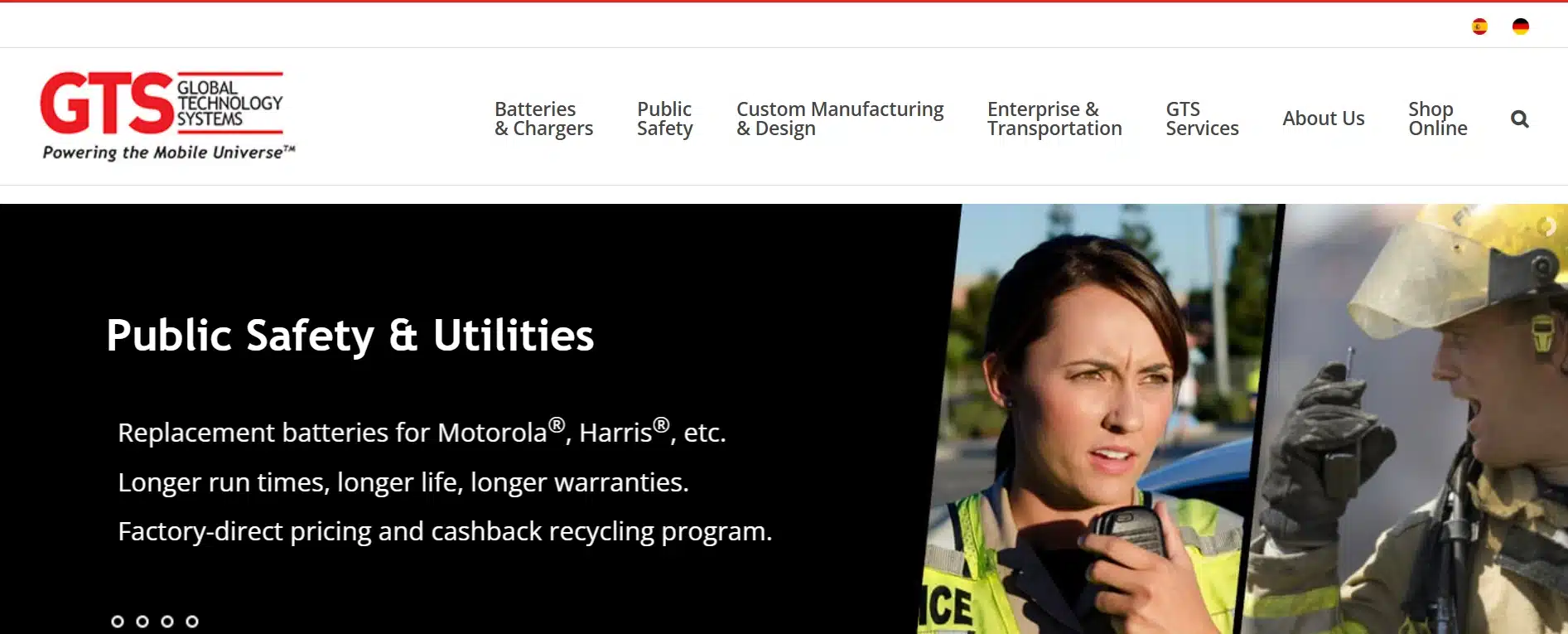
A manufacturer whose real business barely touches ecommerce.
GTS Power (Global Technology Systems) manufactures replacement batteries, chargers, and charging systems for mobile computing, two-way radios, and fleet devices, with customers spanning public safety agencies, transportation and logistics operators, retail chains, and federal buyers.
A consumer storefront sells replacement batteries directly, but the company's actual revenue concentrates in custom manufacturing, fleet battery programmes, and managed replacement services, sold through relationships and procurement cycles rather than checkout carts.
The reportable channel is rarely the valuable one.
D2C ecommerce produces a clean, attributable return figure. Enterprise sales produces almost nothing a dashboard can measure: long cycles, contracts rather than transactions, decisions made by committees over months. So agencies optimise the channel they can report on, and the client's actual revenue sits somewhere else entirely.
Efficient, measurable, and small.
Google Shopping across the consumer storefront at $2,000 a month, returning 450%. Genuinely good performance in a narrow market: replacement batteries have limited consumer search volume and the ceiling is low no matter how well the account runs.
- Monthly budget $2,000
- Reported ROAS 450%
- Attribution Clean
- Ceiling Market size
Unmeasurable, slow, and worth far more.
Search and call campaigns for custom manufacturing and fleet battery services, plus outbound to the executives who sign those contracts. No ROAS figure exists for this. One fleet replacement programme outweighs a year of the consumer channel.
- Output Qualified meetings
- Cadence Dozens per quarter
- Cycle length Months
- Contract value Multiples of D2C
We were brought in for a suspension. That wasn't the job.
GTS Power manufactures replacement batteries, chargers, and charging systems for mobile computing, two-way radios, and fleet devices, with customers spanning public safety agencies, transportation and logistics operators, retail chains, and federal buyers.
Their head of marketing approached us with an urgent problem: the Merchant Center account was suspended for misrepresentation, Shopping was off entirely, and the notice gave no indication which of roughly twenty possible triggers applied.
We fixed it in four weeks. But the suspension was the reason the conversation started, not the reason the engagement lasted three years. The real opportunity was on the B2B side, and nobody was working on it.
-
The business runs on multiple domains
A B2B corporate site, a separate consumer storefront, an additional storefront for public safety products, and regional domains for other markets. Every one of them legitimate. Collectively, a structure Google's verification systems struggle to resolve into a single accountable merchant.
-
Business identity signals didn't line up
When product data, domain ownership, payment profiles, and business information are spread across several properties, the consistency checks Google runs to confirm who is actually selling get weaker. Unresolved, that reads as misrepresentation, regardless of intent.
-
Nothing could run in the meantime
Suspension isn't reduced performance, it's zero. And with the consumer channel offline, the account had no way to demonstrate any of the trust signals that come from normal operation.
-
The bigger opportunity wasn't in ecommerce at all
Custom manufacturing, fleet battery programmes, and managed replacement services are where GTS Power's revenue concentrates. None of that is bought through Shopping ads, and none of it was being addressed.
Four phases, and the last two were the point.
The suspension had to be cleared before anything could run. Once it was, the work moved to where the revenue actually sits.
Clear the suspension: the entry point, not the engagement
We audited the account and every associated property against the full set of conditions that can produce a misrepresentation flag, then corrected the identity, ownership, and business information signals across the domain structure so Google could resolve who was actually selling. Appeals in this category are finite, so the diagnosis had to be right before submitting.
Reinstated in four weeks. Then the actual work began.
Reset and rebuild the D2C account
Full reset of Google Ads and Shopping on the consumer storefront: feed structure, campaign architecture, and bidding rebuilt rather than restarted from what had been running before the suspension.
450% reported ROAS on a $2,000 monthly budget.
Build B2B paid search around what enterprises actually buy
Search and call campaigns targeting custom lithium battery manufacturing, drone battery production, battery replacement for public safety two-way radios, and charging systems for OEM devices. These are low-volume, high-value queries: a handful of searches a month from people with procurement authority, which is the opposite of how consumer campaigns are structured.
Inbound demand from buyers who already knew what they needed.
LinkedIn and email outreach to the people who sign
Cold email and LinkedIn outreach to C-level and senior operations executives responsible for device fleets and charging infrastructure, introducing corporate battery replacement and OEM device services to transportation, logistics, and public safety organisations. Search finds buyers who are already looking. Outbound reaches the far larger group who aren't.
Dozens of qualified enterprise meetings every quarter, sustained across the engagement.
Dozens of meetings a quarter, and no ROAS figure at all.
The outbound programme targeted the executives who own device fleets and charging infrastructure: the people who decide whether ten thousand handheld scanners get new batteries or get replaced entirely.
Over the engagement it produced meetings with Fortune 100 logistics carriers, top-100 retailers, public safety organisations across the country, and federal buyers. Dozens of qualified conversations every quarter, sustained rather than spiked.
One of those conversations became a Fortune 100 logistics carrier as a client: a single relationship worth more than the entire consumer channel across the whole engagement.
And there is no return on ad spend figure for any of it. Enterprise procurement runs on cycles measured in quarters, through committees, ending in contracts rather than transactions. No platform attributes it, no dashboard reports it, and no agency can put it in a results band next to a percentage.
Why this matters beyond GTS Power
A large number of manufacturers run exactly this shape: a consumer storefront that's measurable and modest, alongside an enterprise business that's the actual company. The consumer side generates reportable numbers. The enterprise side generates revenue.
An agency paid to produce good reporting will optimise the first one, because that's where the graph goes up. It's not dishonest, it's just what happens when the measurement system decides the priorities.
If most of your revenue comes from contracts rather than checkouts, ask your agency what they're doing about it. If the answer is only about the ecommerce channel, they're working on the part that's easy to show you.
Four things worth taking from this.
Multiple domains are a suspension risk
Separate B2B, D2C, and regional properties are normal business structure and a genuine verification problem. If you run several, get the identity signals aligned before Google decides for you.
Don't appeal until you know the cause
Misrepresentation notices name the policy, not the trigger. Appeals are finite and failed ones attract tighter scoring, so audit against every possibility before submitting.
B2B search is a different discipline
A handful of monthly searches from people with procurement authority beats thousands of consumer clicks. Volume metrics will make these campaigns look like failures.
Judge channels by revenue, not reportability
The channel producing a clean percentage is not automatically the one producing your income. Ask which part of the business the work is actually pointed at.
What went into it.
Seven of our services across three years, led by B2B lead generation, paid search, and LinkedIn outreach.
Which part of your business is your marketing actually pointed at?
If you sell to both consumers and enterprises, there's a good chance the reporting is dominated by the smaller half. Give us read-only access and we'll show you where the spend is going, where the revenue is coming from, and whether those are the same place. Findings are yours to keep either way.
Read-only access · No obligation · You keep your accounts