
Case studies / eCommerce
Full commercial build · D2C & marketplaceThey arrived with a product. Everything else didn't exist yet.
Solar Pool Ionizers came to us in early 2021 as a private label brand with a working product and nothing around it: no packaging, no store, no fulfilment, no way to answer a customer. Marketing was the eleventh thing we built, not the first. Five years later we're still running it.
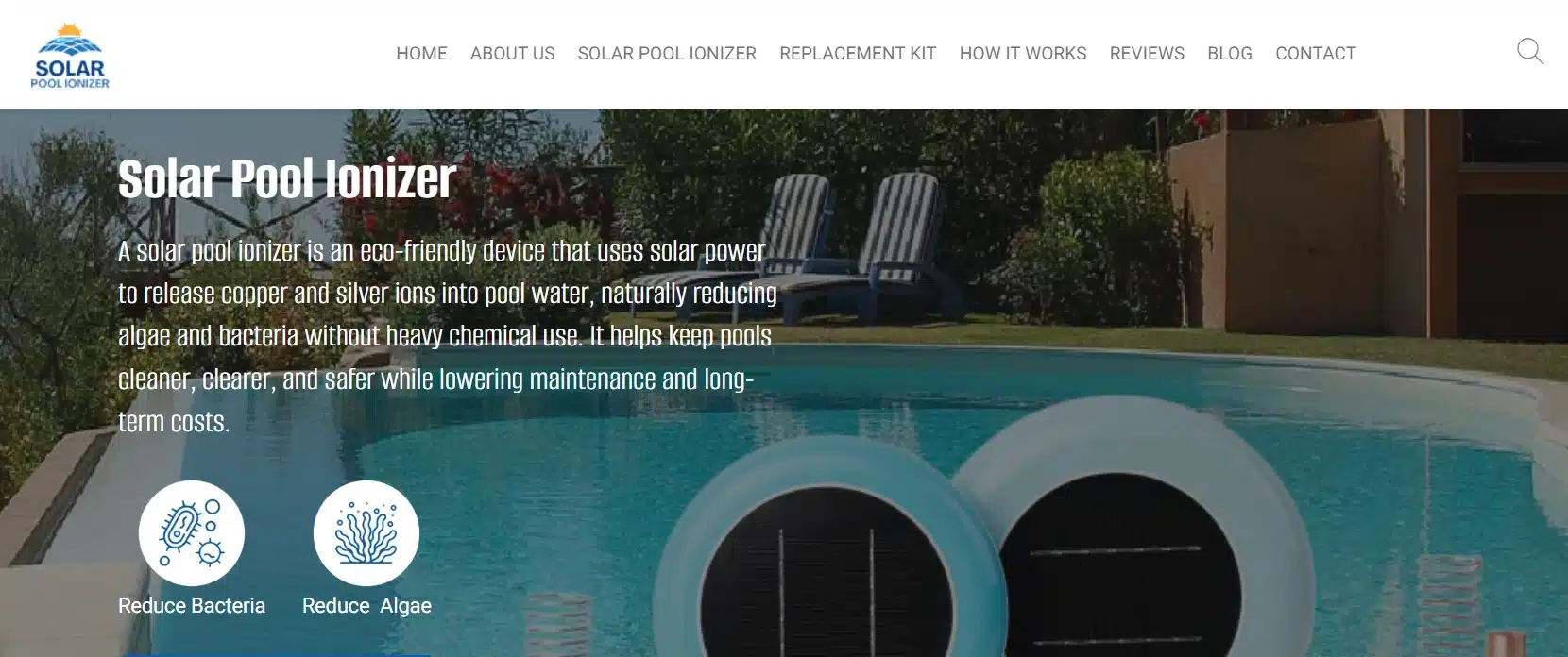
A working product, and nothing built around it yet.
Solar Pool Ionizers sells a floating device that uses sunlight to release copper ions into pool water, reducing how much chlorine an owner needs. Genuinely useful, and genuinely unfamiliar: most pool owners have never heard of the category.
When the brand came to us in early 2021, it had the product and a domain. Everything that turns a product into something people can actually buy, brand, packaging, a store, fulfilment, support, still had to be built.
You can't market a product that isn't a business yet.
A private label brand with a working product is further from selling than it looks. There's no packaging a customer would trust, no store to buy from, no photography or video, no way to fulfil an order, no system for answering the question that stops someone buying. Point an ad budget at that and you pay full price for traffic that lands nowhere.
Buy traffic for an unfinished business.
It's the fastest thing to launch and the easiest thing to bill for. But every gap downstream, thin packaging, an unconvincing product page, no reviews, no answer to a pre-purchase question, converts paid traffic into nothing, at auction prices.
- Time to first campaign Fast
- Conversion infrastructure Missing
- What the budget buys Traffic
- What breaks Everything after the click
Ads were the eleventh thing we built.
Brand, packaging, video, store, offers, CRM, reviews, support, logistics, marketplaces, then marketing. Slower to a first campaign, and every dollar that campaign spends arrives somewhere designed to convert it.
- Time to first campaign Deliberately later
- Conversion infrastructure Built first
- What the budget buys Customers
- What it enables Repeat revenue
A good product and an empty company.
A solar pool ionizer is a floating device that uses sunlight to release copper ions into pool water, reducing how much chlorine an owner needs. Genuinely useful, and genuinely unfamiliar: most pool owners have never heard of the category.
In early 2021 the client had the product and a domain. Everything that turns a product into something people can buy was still to be built.
-
No brand, and private label makes that harder
A private label product needs to look like it came from a company that stands behind it. Without brand materials and packaging that hold up in a customer's hands, a $120 purchase from an unknown seller is a difficult ask.
-
The product needs explaining before it can be sold
Nobody wakes up wanting a pool ionizer. They want less chlorine, clearer water, and lower maintenance. The gap between those and this device is a paragraph of explanation, which is a video problem rather than a copy problem.
-
Nothing existed after the click
No store, no offers, no reviews, no fulfilment integration, no support system. Traffic without those isn't marketing, it's spending.
-
A one-time purchase is a hard business
Someone buys an ionizer once. Without something to bring them back, every dollar of growth has to come from a new customer, permanently, and at rising cost.
Twelve workstreams, in this order.
Each one existed because the one before it made it possible.
Brand, packaging, and product video
Brand materials and identity first, then physical product packaging: the thing a customer actually holds and judges. Then video production, because a device that works through an invisible chemical process has to be shown rather than described.
A product that looked like it came from a real company.
Shopify build, offers, and app integration
Store development, then the commercial layer on top: offer structure, bundles, and the app integrations that make upsells, subscriptions, and post-purchase flows possible. The store isn't the shop window, it's the machine.
Somewhere for traffic to land that was built to convert it.
CRM, automation, reviews, and customer communication
CRM setup with automated email and SMS across the customer lifecycle, a structured review collection programme, and support workflows so questions got answered rather than becoming abandoned carts. In an unfamiliar category, reviews are the single strongest conversion asset available.
Customers who bought, reviewed, and could be reached again.
Logistics integration
Fulfilment connected to the store and the CRM, so orders moved without manual handling and support could answer "where is it" without asking someone to check.
Operations that could handle volume before volume arrived.
Marketplace expansion
Listings, content, and marketing across Amazon, eBay, Walmart, and Etsy. Different buyer, different search behaviour, different rules on each, but the same product data, packaging, and review base built in the earlier phases.
Four additional storefronts running from one operation.
Digital marketing, paid and organic
Only now: paid media, SEO, content, social, and PR. Every channel pointing at a store, an offer structure, and a support system that were already built to receive it.
Marketing spend arriving somewhere that could use it.
AI automation for customer service and product FAQs
Automated handling of the repetitive questions that dominate this category: pool size compatibility, what it replaces, how maintenance works, freeing the team for the questions that actually need a person.
Support that scales without headcount.
Turning a one-time purchase into a season.
The ionizer is bought once. The copper anode inside it wears down and has to be replaced, which means every customer has a genuine, recurring reason to come back, if anyone builds the system that brings them.
Most ecommerce operations optimise the first sale and stop. We built the second one, and the third.
Upsell at purchase
A replacement kit offered alongside the ionizer at 10 to 15% off. The cheapest moment to sell a customer their second product is while they're buying the first.
Bundles
Structured bundles across ionizer sizes and replacement components, raising order value without discounting the core product.
Seasonal reorder automation
Automated flows so customers reorder replacement kits each season without having to remember or navigate anything.
That last one is the important piece. Pool care is seasonal, and a customer who bought in May of one year has no reason to think about you in April of the next, unless something reminds them at the right moment, with the right product, and makes reordering take fifteen seconds.
A consumable component inside a durable product is a subscription business hiding in plain sight. Most brands sell the durable part and never build the rest.
Four things worth taking from this.
Find the consumable in your product
Filters, anodes, cartridges, refills, blades. If something inside your product wears out, that's recurring revenue you're probably letting a third party capture.
Build the order, not just the channels
Ads before packaging, or ads before support, means paying auction prices for traffic that hits a gap. Sequence matters more than speed to launch.
Unfamiliar products are a video problem
If your product works through a process people can't see, no amount of copy replaces showing it. That's a production line item, not a marketing one.
Marketplaces reuse everything you already built
Photography, packaging, product data, and reviews carry across Amazon, eBay, Walmart, and Etsy. The expensive work is done once, the channels are comparatively cheap to add.
What went into it.
Nine of our services, over five years and counting.
Is your product ready for the marketing you want to run?
Tell us where your brand actually stands, packaging, store, reviews, support, fulfilment, and we'll tell you honestly what's missing before you spend on traffic. Findings are yours to keep either way.
No obligation · We'll say if you're not ready to spend on ads yet