
Case studies / Healthcare
Addiction treatment PPC · Restricted termsThe words patients search are the words Google won't approve.
Treatment Alternatives was a long-established South Florida addiction treatment facility. The queries that brought them patients, such as heroin detox, opioid rehab and cocaine treatment, are among the hardest terms to get approved in Google Ads. Winning approval on those, and only those, cut clicks by 35% and more than doubled the conversion rate.
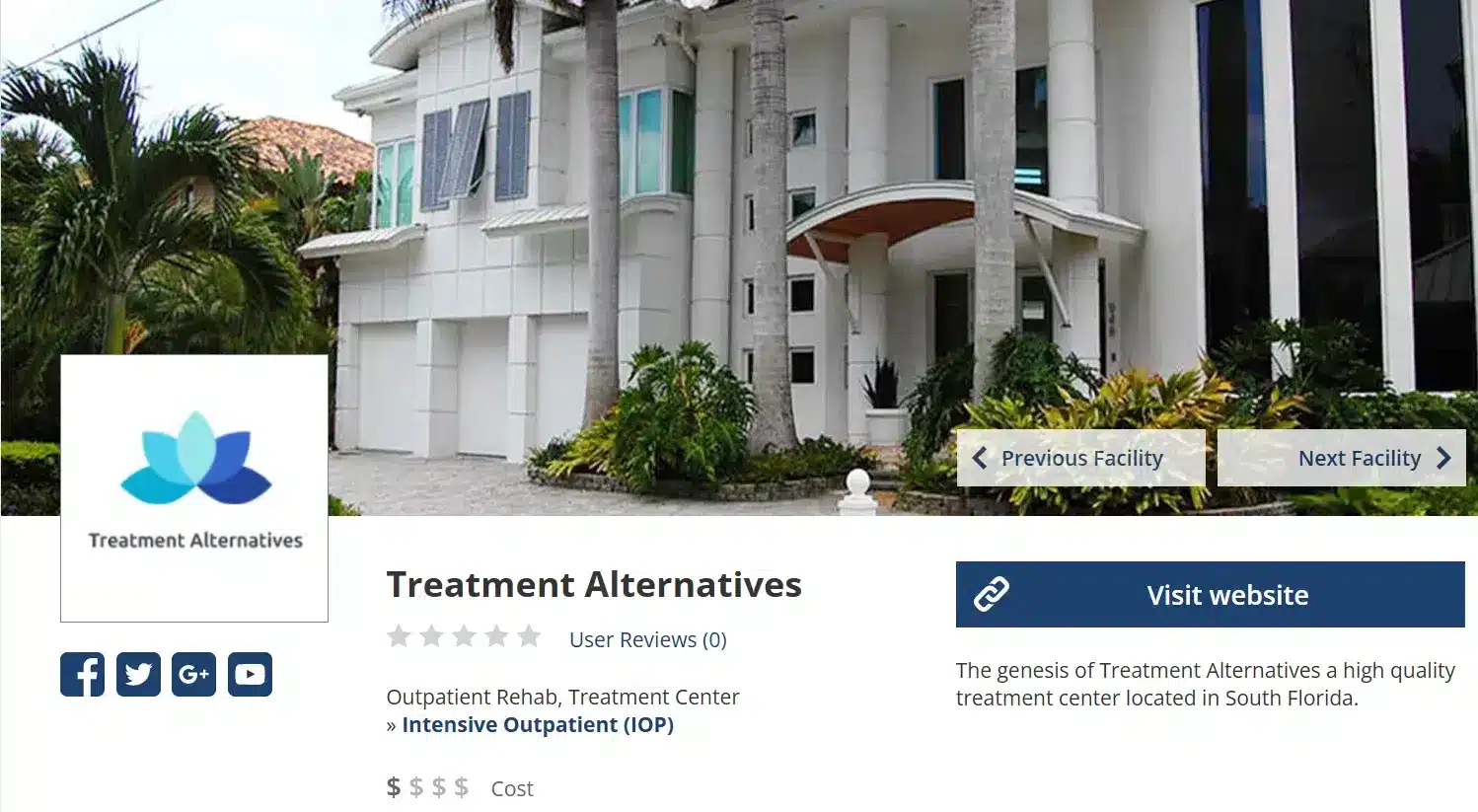
A trusted South Florida facility, treating addiction for decades.
Treatment Alternatives was a long-established addiction and mental health treatment provider in South Florida, holding Joint Commission Gold Seal accreditation and running outpatient, intensive outpatient and partial hospitalisation programmes from a single facility.
The reputation was established well before this engagement. What wasn't working was the Google Ads account behind it, which was spending heavily on traffic that was never going to call.
Fewer clicks was the strategy, not a side effect.
Click volume fell by more than a third. On a traffic report that looks like the campaign broke. It was the point: the clicks that disappeared were people researching addiction, comparing facilities for a family member, or writing school papers. The clicks that remained were people trying to get into treatment.
More clicks, same admissions.
Broad keywords, loose match types, and a report that shows volume climbing. In a category where a click can cost more than a meal out, most of that budget reaches people who will never call, and the intake team spends its day on enquiries that were never going to become patients.
- Clicks High
- Cost per click Extreme
- Conversion rate Low
- ROI 60%
Buy less, and buy better.
Exact and phrase match on the terms that indicate someone is seeking treatment now, with everything else excluded. Fewer people arrive, far more of them pick up the phone, and the intake team spends its time on people who actually need a bed.
- Clicks Down 35%
- Conversion rate Up 131%
- Calls Up 77%
- ROI 220%
A trusted facility, and an account buying the wrong traffic.
Treatment Alternatives had been treating addiction and mental health in South Florida for decades, holding Joint Commission Gold Seal accreditation and running outpatient, intensive outpatient and partial hospitalisation programmes from a single facility.
The reputation was established. The Google Ads account wasn't working.
Four problems, and the first one is specific to this category.
-
The highest-intent terms are the hardest to approve
Heroin detox, opioid rehab, cocaine treatment, methadone and alcohol withdrawal are what people actually type when they need help, and they sit in the most scrutinised corner of Google's healthcare policies. Even a certified advertiser faces approval friction on exactly the queries that matter most.
-
The account was buying research traffic
Broad matching in a category with extreme cost-per-click meant budget going to people gathering information rather than seeking admission. Volume looked healthy. Admissions didn't follow.
-
Intent varies enormously within the category
Someone searching a programme type is at a different stage from someone searching a substance, who is at a different stage again from someone searching detox. Treated as one audience, the campaign served all of them the same message.
-
Conversion measurement was incomplete
In addiction treatment the enquiry is almost always a phone call, frequently made in distress and often out of hours. Without proper call tracking the account had no reliable signal to optimise toward.
Five steps, starting with approval.
Nothing else mattered until the terms that convert could actually run.
Get the difficult terms approved
Working term by term through the queries that indicate someone seeking treatment: drug and alcohol rehab, addiction withdrawal, cocaine and opioid treatment, heroin detox, methadone, intensive outpatient. Each carries its own scrutiny, and ad copy and landing page content had to satisfy healthcare advertising requirements before any of it would serve.
The account could finally compete on the terms that convert.
Rebuild the account structure
The existing account was rebuilt from the ground up rather than adjusted. Campaigns separated by type, search, call-only, display and remarketing, so budget and bidding could be controlled independently rather than one campaign type quietly consuming another's spend.
Each campaign type measurable and fundable on its own terms.
Segment by intent, not by keyword volume
Tightly structured ad groups separating programme-type searches from substance-specific searches from treatment-stage searches. Exact and phrase match throughout, with aggressive negative keyword work to exclude research, academic and employment queries that look relevant and never convert.
This is where the 35% of clicks disappeared.
Build around the phone call
Call-only campaigns and call extensions prioritised, with tracking on every inbound call. Ad copy rewritten and A/B tested around availability and what happens when someone calls, rather than outcome claims, both a policy requirement and the right way to write for someone in crisis.
Click-through rates between 5% and 12% across search and call-only.
Tighten geography to the catchment that works
Radius targeting matched to the area a patient could realistically travel from. Outpatient and intensive outpatient programmes involve attending several times a week: someone sixty miles away isn't a distant prospect, they're someone who cannot complete the programme.
ROI from 60% to 220% year over year.
Clicks went down. That was the win.
Most agency reporting treats declining traffic as a problem to explain away. Here it's the clearest evidence the account improved.
35% fewer clicks. 131% higher conversion rate. 77% more phone calls. The same budget stopped buying people who were reading about addiction and started buying people trying to get into treatment.
In a category where a single click can cost as much as a restaurant meal, the traffic you decline to buy matters as much as the traffic you win. A third of the previous spend was reaching students, researchers, family members gathering options, and people searching employment terms that overlap with treatment vocabulary.
None of them were going to call. All of them were being paid for.
Why the approval work made it possible
Narrowing to high-intent terms only helps if those terms can actually run. The queries with the strongest intent in this category, like substance-specific searches, detox and withdrawal, are also the ones carrying the most policy scrutiny.
An advertiser who can't get those approved is left bidding on broad, expensive, low-intent alternatives, which is precisely where the original account was. Winning approval on the difficult terms is what made cutting the easy ones possible.
Four things worth taking from this.
Declining clicks can be the goal
If your cost per click is high and your conversion rate is low, buying less traffic is often the fastest improvement available. Judge the account on conversions, not sessions.
Negative keywords are the real work
In categories with vocabulary overlap, such as medical, legal or financial, research, academic and employment queries consume budget silently. Excluding them is unglamorous and it is where the money is.
Approval determines strategy
In restricted categories the terms you can run dictate what's possible. If the high-intent queries won't approve, you're structurally forced onto expensive low-intent ones.
Match geography to the treatment model
Programmes requiring frequent attendance need tight radius targeting. Residential programmes don't. The right campaign geography follows how often the patient has to physically be there.
What went into it.
Six of our services, on one account.
Paying a lot per click and converting very few?
In expensive categories the fastest improvement is usually buying less traffic rather than more. Give us read-only access and we'll show you which search terms are consuming budget without ever converting, and what the account looks like without them. Findings are yours to keep either way.
Read-only access · No obligation · You keep your accounts