
Case studies / eCommerce
Google Shopping · Licensed merchandiseSame cooler. Thirty-two different products.
Glaros makes NFL-licensed coolers. A fan doesn't buy a cooler: they buy their team, and the same unit with a different logo is a different purchase to a different person. We built the direct-to-consumer Shopping account around that, on a budget that had to cover the whole league.
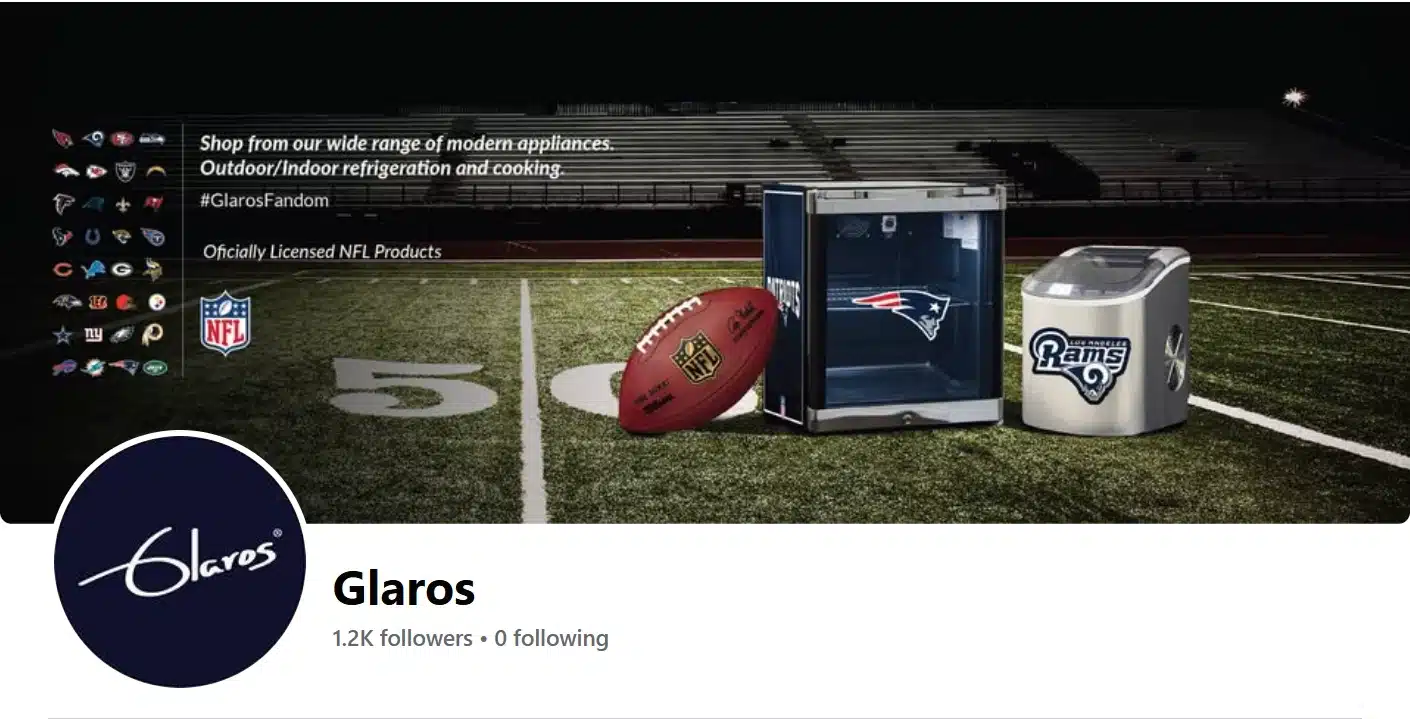
B2B Cooler Manufacturer Expands Into NFL Ecommerce .
Glaros Consumer Products, a subsidiary of Screen Graphics of Florida, has supplied refrigerated coolers to commercial clients for decades. Its in-house team handled wholesale and B2B accounts.
We were brought in for the other channel: selling NFL-licensed coolers direct to consumers through ecommerce, a business the company had never run before.
In licensed merchandise, the logo is the purchase.
Nobody searches for "a $600 cooler" and then picks a team. They start with the team. The product underneath is identical across the range, but demand for each version depends on where the fanbase lives, how the season is going and who's buying a gift for whom. A feed that treats the range as one product can't see any of that.
A cooler, in several colours.
The whole range managed as a single product group. Simple to run, and blind: budget flows to whichever listings happen to win auctions, with no way to see which teams actually sell or to push harder on the ones that do.
- Unit of management The range
- Which teams sell Invisible
- Bid control All or nothing
- What you learn Very little
Thirty-two products that share a design.
The feed organised so each team's coolers could be seen, measured and bid on separately. Even on a budget too small to run every fanbase as its own campaign, the structure meant the data showed which teams were selling and spend could follow them.
- Unit of management The team
- Which teams sell Visible
- Bid control By product group
- What you learn Where demand is
A B2B manufacturer selling direct to fans.
Glaros Consumer Products, a subsidiary of Screen Graphics of Florida, has supplied refrigerated coolers to commercial clients for decades. Its in-house team handled wholesale and B2B accounts. We were brought in for the other channel: selling direct to consumers through ecommerce.
Four things shaped how that account had to be built.
-
The buyer is a fan, not a shopper
A $600 cooler is not an impulse purchase and not a commodity comparison. It's bought because of what's printed on the front, for a home bar, a game-day setup, or a gift for someone who lives and breathes a particular team.
-
One budget had to cover the whole league
At $5,000 a month there was no room to run a separate, fully built campaign for every team's fanbase. The structure had to get team-level visibility without team-level budgets.
-
No Merchant Center or feed to start from
The direct-to-consumer channel needed its Merchant Center account and product feed built from the ground up before Shopping could run at all.
-
Wholesale and retail had to stay separate
The in-house team owned B2B. Our account needed to reach consumers without competing with, or confusing, the commercial side of the business.
Five parts, built for a small budget and a big range.
Granular where it was cheap to be granular. Broad where the budget left no choice.
Build Merchant Center and the feed from scratch
The account and product feed built from the ground up, with accurate categorisation and product data so the coolers were eligible and relevant in Shopping results.
A catalogue that could actually serve.
Structure the feed by team
Products grouped so each team's range could be tracked and bid on independently. Feed structure costs nothing extra to run: it's the cheapest way to get granular visibility when the budget can't pay for granular campaigns.
Team-level data on a league-level budget.
Run Shopping and Search alongside each other
Shopping to put the product image in front of people browsing, and Search to catch the ones already looking for a licensed cooler. For a product this visual, the image in the result does much of the selling.
An 8%+ click-through rate at $1.70 a click.
Target the fan, broadly
Audience targeting aimed at men aged 35 and over with an interest in the NFL, the core buyer for a premium piece of team merchandise. Deliberately broad rather than split by fanbase, because the budget couldn't fund thirty-two separate audiences.
The right buyer, without the cost of fragmenting.
Retarget the ones who looked and left
Dynamic retargeting showing visitors the exact cooler they'd viewed. A $600 purchase often isn't made on the first visit, and seeing their own team's product again is what brings a fan back.
200+ attributed direct sales at a $600 average order.
A working D2C channel, and two things we'd do with more budget.
- Monthly budget $5,000
- Average cost per click $1.70
- Click-through rate 8%+
- Average order value ~$600
- Attributed sales 200+
The account took a manufacturer with no direct-to-consumer channel to a working one: a feed that could serve, a structure that showed which teams sold, and more than 200 sales of a $600 product.
It also ran on a budget that forced choices, and two of them are worth being straight about, because they're the first things we'd change.
The NFL calendar wasn't used. Spend ran evenly rather than building into the season, playoffs, the Super Bowl, the draft and gifting dates. For team merchandise that's the single biggest lever available.
Fanbases weren't targeted geographically. A team's coolers sell overwhelmingly in its home market. With the feed already structured by team, pointing each team's products at its own region was the natural next step, and one the budget didn't reach.
The team-level feed structure is what made both possible. It's why we'd recommend it even to brands that can't yet afford to use it fully: the structure costs nothing, and it means the data is already there when the budget is.
Four things for licensed and variant-heavy products.
Structure the feed finer than your budget
Feed structure is free. Campaigns cost money. Organise products at the level you'd want to manage them eventually, and let the data accumulate before you can afford to act on all of it.
Variants can be separate markets
A colour, a licence, a team or a size can each have its own buyer, geography and season. If they do, one product group hides the difference.
Fandom has a calendar
Sports, entertainment and event merchandise all peak around dates you know in advance. Budget into them rather than evenly across the year.
Keep wholesale and retail apart
When one company sells both B2B and D2C, give each channel its own owner and its own account, so neither undercuts nor confuses the other.
What went into it.
Five of our services, on the D2C channel.
Is your feed hiding which products actually sell?
If your range has variants that behave like separate markets, licences, teams, colours, sizes, a flat feed is averaging them together. Give us read-only access and we'll show you what's selling underneath the average. Findings are yours to keep either way.
Read-only access · No obligation · You keep your accounts