
Case studies / eCommerce
Merchant Center · Restricted categoryEvery product rejected. The problem wasn't the feed.
Key Nutrients arrived as a startup with five supplements and all five disapproved on Google Shopping. Supplements are a restricted category, and the words that sell them are frequently the words that get them rejected. Fixing that took a week: a rewrite, not a reformat.
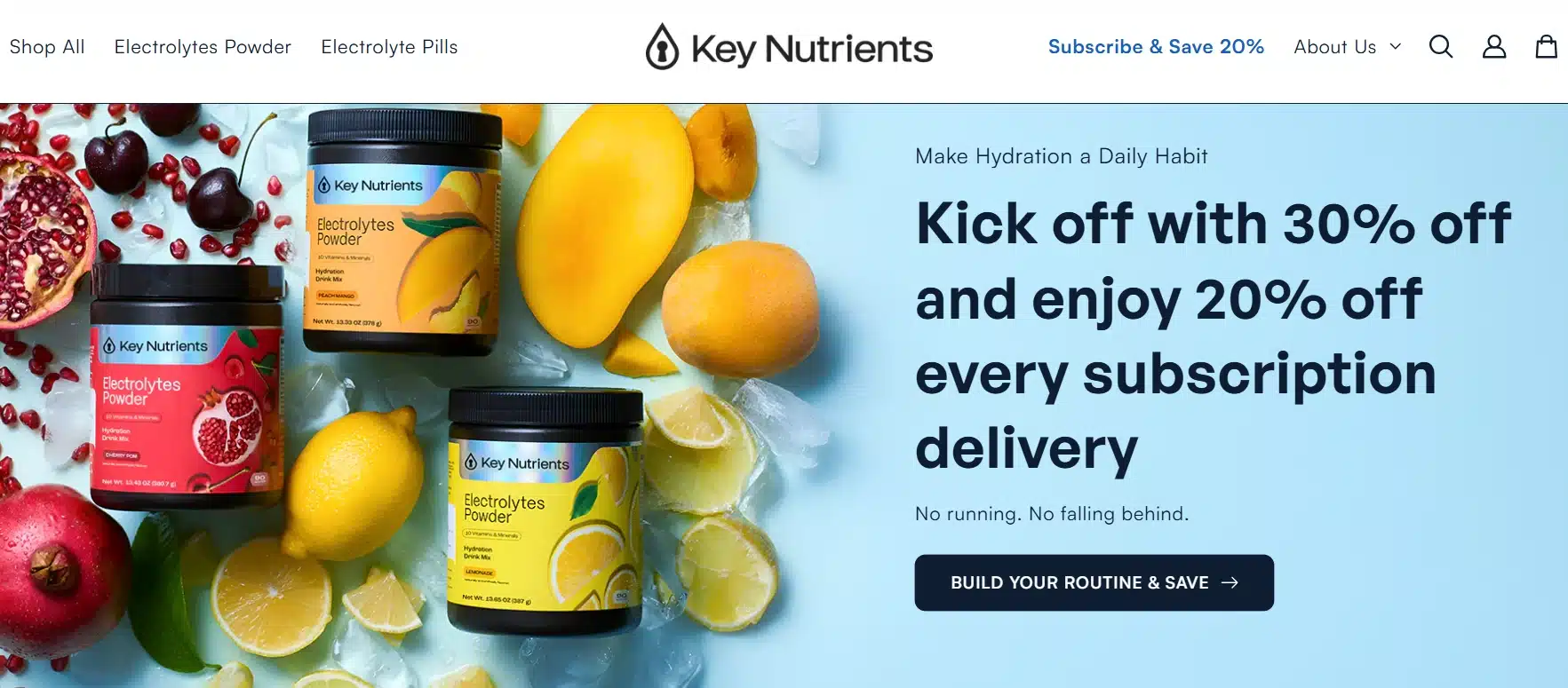
A veteran-owned brand navigating a restricted category.
Key Nutrients is a veteran-owned, family-operated supplement brand based in Scottsdale, Arizona, selling natural supplements direct to consumers.
At the time of this engagement the company was an early-stage business with five products and a small budget, competing in one of Google Shopping's most tightly regulated categories, where the same language that sells a supplement is often the language that gets it rejected.
Supplements aren't a feed problem. They're a claims problem.
When products are disapproved, the instinct is to check the feed specification: attributes, GTINs, image sizes, formatting. Those matter. But in a restricted category like supplements, the most common reason a product won't approve is what the listing says, and the language that gets rejected is usually the language the brand wrote because it sells.
Fix the formatting, resubmit, fail again.
Add the missing attributes, correct the categories, tidy the structure. All necessary, none of it sufficient. The products stay disapproved because the titles and descriptions still say what they said before, and that's what triggered the rejection.
- What gets fixed Structure
- What caused it Language
- Resubmissions Repeated
- Products serving Still none
Rewrite the catalogue to sell within the rules.
Every title and description rebuilt so the product remains compelling without making a claim the policy prohibits. That's a writing job in a regulated category, not a spreadsheet job, and it's why generic feed tools don't solve it.
- What gets fixed Both
- Approach Rewrite, not reformat
- Time to approval 1 week
- Products serving All five
Five products, zero eligible.
Key Nutrients is a veteran-owned, family-operated supplement brand in Scottsdale, Arizona. At the time of this work they were a startup with a small budget and five products, and the Merchant Center account had never been properly configured.
Every product was disapproved. Not underperforming, not permitted to appear at all.
Four separate causes were overlapping.
-
Claims language, and sleep was the hardest
Google's healthcare and medicines policies restrict claims that a product treats, prevents or cures a condition. Sleep supplements sit closest to that line: the distance between describing a product that supports rest and one that treats insomnia is a few words, and ordinary supplement marketing crosses it routinely.
-
Missing and incorrect attributes
The standard feed problems underneath the policy problems: incomplete product data, categorisation that didn't match what Google expected, and structural gaps that would have caused rejections even in an unrestricted category.
-
Ingredient flags
Certain supplement ingredients are restricted or prohibited depending on the market, and listings containing them get held regardless of how carefully the rest is written. Identifying which products were flagged for what required going through them individually.
-
The account had never been set up properly
This wasn't a working account that broke. Configuration, verification and account level settings all needed building from scratch before any product level work would hold.
A week to approval, then four campaigns.
With five products and a startup budget, there was no room for repeated failed resubmissions.
Rebuild the account, not just the feed
Full Merchant Center configuration from the ground up: account settings, verification, shipping and tax configuration, and the structural foundations that product level fixes depend on. Nothing at the product level holds if the account underneath it is wrong.
A properly configured account to submit into.
Diagnose each rejection individually
Five products, three overlapping causes, and some products flagged for more than one. We worked through each SKU separately to establish what was actually triggering the disapproval rather than applying a blanket fix and hoping.
A specific reason for every rejected product.
Rewrite titles and descriptions to sell within policy
The core of the work. Every title and description rebuilt so the product still communicated its benefit without making a claim the healthcare policy prohibits. The sleep products took the most care, keeping them compelling while removing any implication of treating a condition.
A catalogue that sold and complied at the same time.
Fix the structural problems underneath
Attributes completed, categorisation corrected, product data quality brought up to standard: the issues that would have caused rejections even without the policy layer on top.
All five SKUs verified and approved within a week.
Launch four campaign types on a small budget
Shopping across the approved catalogue. Search campaigns built around specific product categories rather than generic supplement terms. Brand campaigns to defend the name. Retargeting to bring back visitors who didn't convert first time, which matters disproportionately in supplements, where people compare before they commit.
A startup with five products competing in a crowded category.
Why sleep supplements are the hardest to approve.
If you sell supplements and something keeps getting rejected, it's disproportionately likely to be a sleep product. There's a structural reason.
Insomnia is a medical condition. Sleep is not. Almost every phrase that makes a sleep supplement sound effective sits somewhere between those two things, and Google's healthcare policy draws a line through the middle.
A supplement brand writing for its own website will reach naturally for language about falling asleep faster, staying asleep, or relief from sleeplessness. On the brand's own site that's normal marketing. In a Merchant Center listing it can read as a claim to treat a condition, and the product doesn't serve.
The same applies across the category in different degrees. Anything touching immunity, weight, pain, mood or anxiety runs into the same boundary. Sleep is simply where the line is finest.
Why this isn't a tool problem
Feed management platforms are good at structure. They complete attributes, fix categorisation, normalise data and catch formatting errors, genuinely useful, and they'd have fixed part of this.
What no tool does is rewrite a product description so it remains persuasive while removing an implied medical claim. That requires someone who understands both what the policy prohibits and what the customer needs to hear, working through the catalogue one product at a time.
That's why supplement brands cycle through resubmissions for weeks. They keep fixing the part a tool can see.
Four things for anyone selling in a restricted category.
Read the rejection, not the feed spec
If products are disapproved in a restricted category, check the policy reason before touching the data. Structural fixes won't clear a claims rejection, and every failed resubmission costs time.
Your best converting copy is your riskiest
The language that makes a supplement sell is usually the language closest to a health claim. Website copy and feed copy have different rules and shouldn't be the same text.
Diagnose per product, not per catalogue
Different SKUs get rejected for different reasons, and some for several at once. A blanket fix clears the products that shared one cause and leaves the rest disapproved.
Fix the account before the products
If configuration, verification or settings were never done properly, product level work won't hold. Build the foundation first even when it feels like a detour.
What went into it.
Six of our services, on one account.
Products disapproved and you don't know why?
Before you resubmit again, it's worth knowing whether you're fixing the thing that actually caused the rejection. Give us read-only access to Merchant Center and we'll tell you what's flagged, why, and what it would take to clear it. Findings are yours to keep either way.
Read-only access · No obligation · You keep your accounts